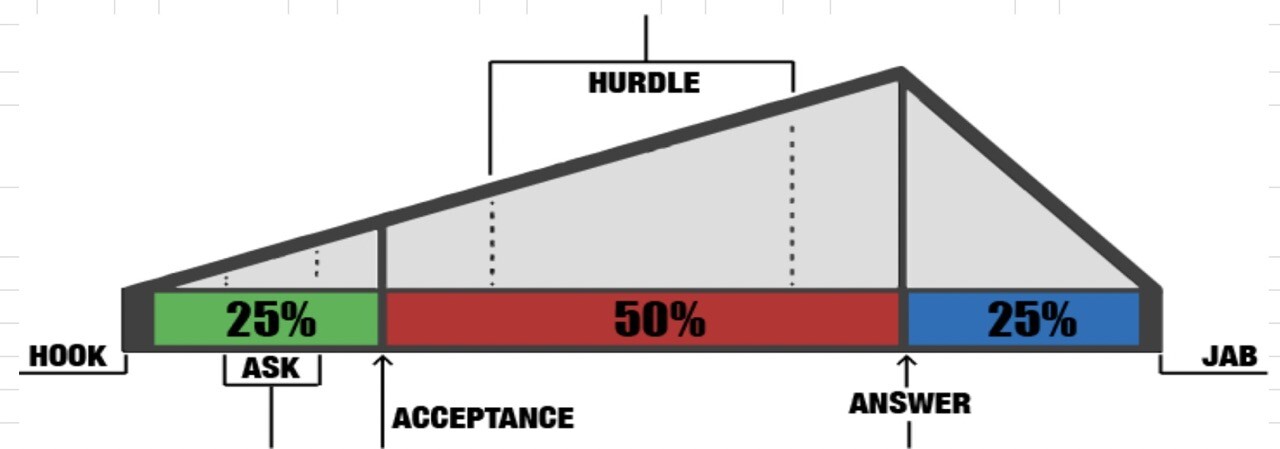
In video, telling a good story is essential. Many of us learn the basics of storytelling, yet very few schools teach how to use those film concepts in non-fiction productions, such as a video for a hotel, a restaurant or a brand. It is a bit like knowing the notes of a song without knowing how to put them together into a melody.
Storytelling isn’t only an art: it is also a structured framework. Creativity plays a big part, but doing it well usually means mastering the foundations of the framework before trying something new. That goes against a common belief, and it is a principle we hold to.
The references
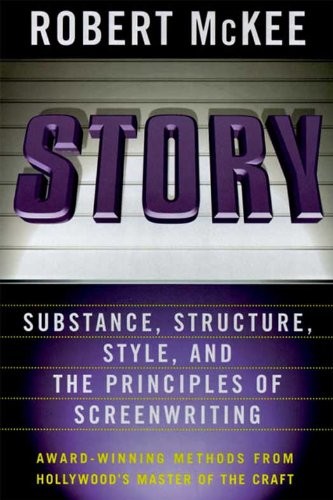
One of the books screenwriters turn to most is Story, by Robert McKee. It explains the theory and the rules of storytelling, but it doesn’t always bridge the gap between theory and practice.
Plenty of YouTube teachers claim to have the secret, but most of them simplify the concepts for one niche, such as documentaries or short films. Then came Muse Storytelling. Its course not only breaks the storytelling process down, it gives a structured way to turn the concepts into a real script.
Even so, the process still takes a lot of time and energy. It is manual work, guided by clear steps. A full-time screenwriter may not need more, but for people who juggle several roles in a production, we estimate mistakes can be cut by about half.
Our aim has always been to make the complex simple, for our clients. We work mostly with small and medium businesses, which can’t always hire a specialist for every task of a production, and the pace of social media and fast content calls for a new approach.
Automating the method
We built a framework inspired by Muse Storytelling in Google Sheets, aimed at cutting the manual work of structuring the information. What makes it useful is the way it handles the subjective parts:
- A rating system for the personas and their specifics: their desires, their complexities and more.
- Assisted text fields that guide and focus the writing, so no step gets lost.
- If-then formulas that apply the rules, which makes storytelling a more streamlined process.
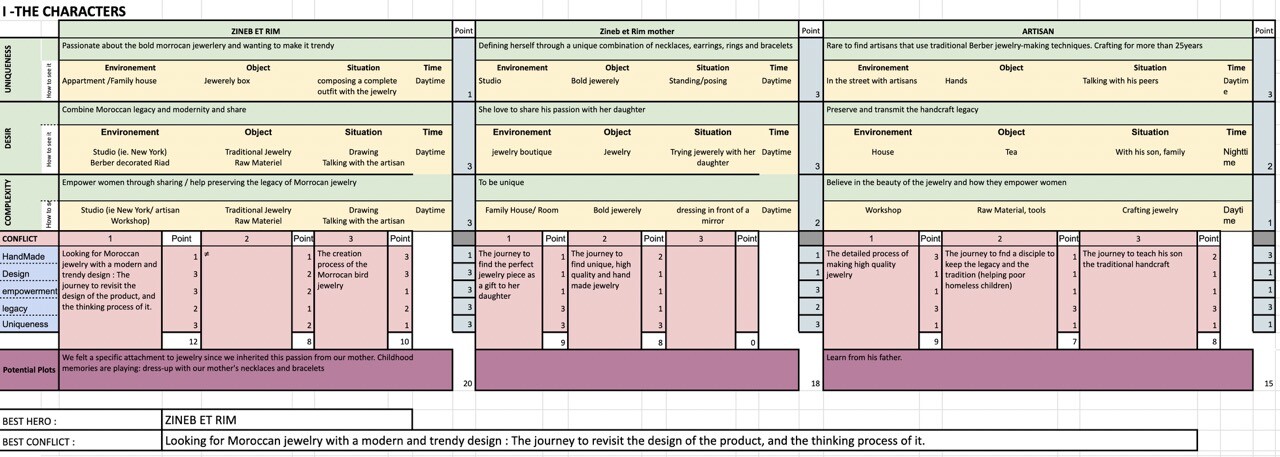
As Muse recommends, our process has two parts. We go further in the construction phase, with many logic formulas. For example, the sheet calculates the length of each step of the story from the total length wanted for the video, which estimates how much action each section needs. The sheet adapts to several variables and checkbox options, and gives different assisted texts for each case.

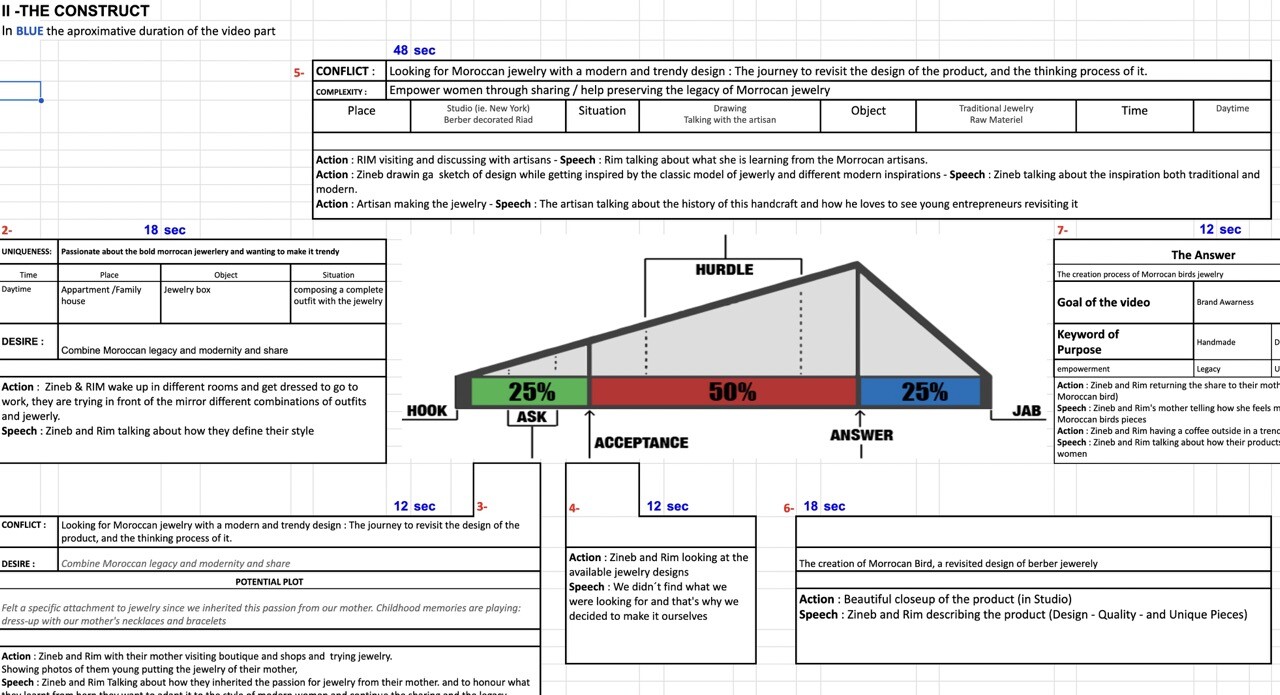
The result
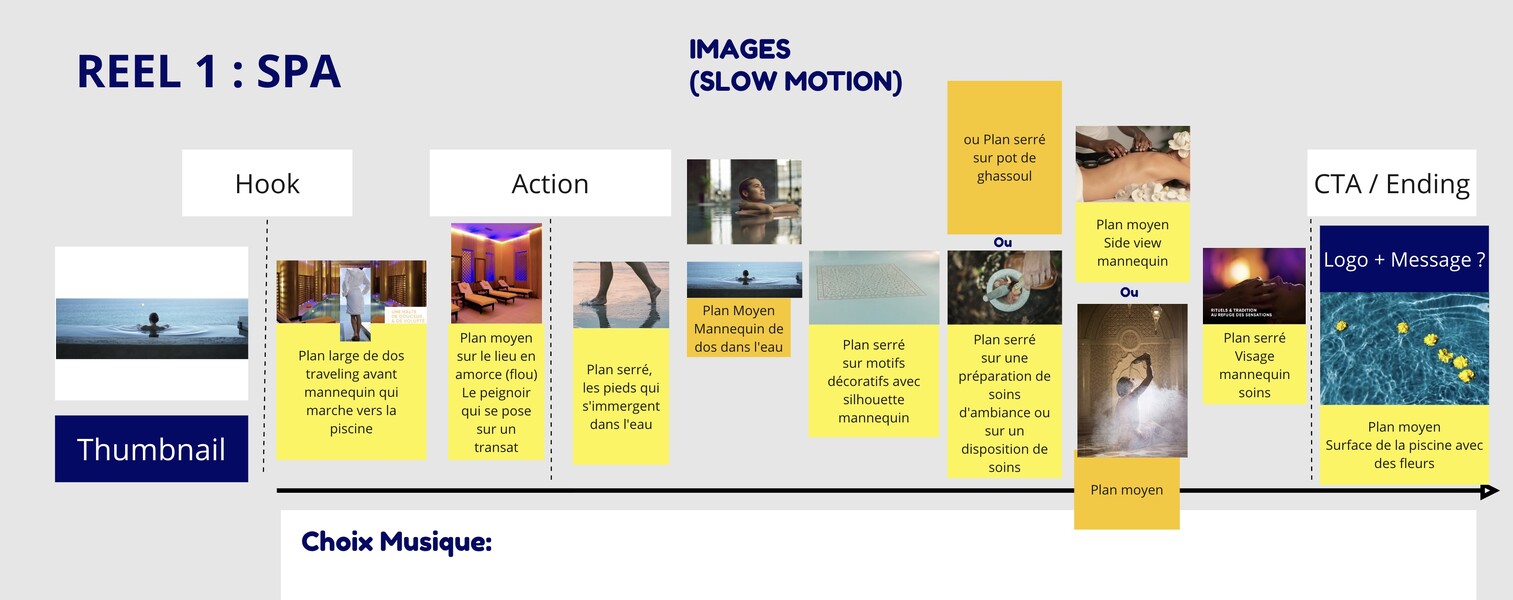
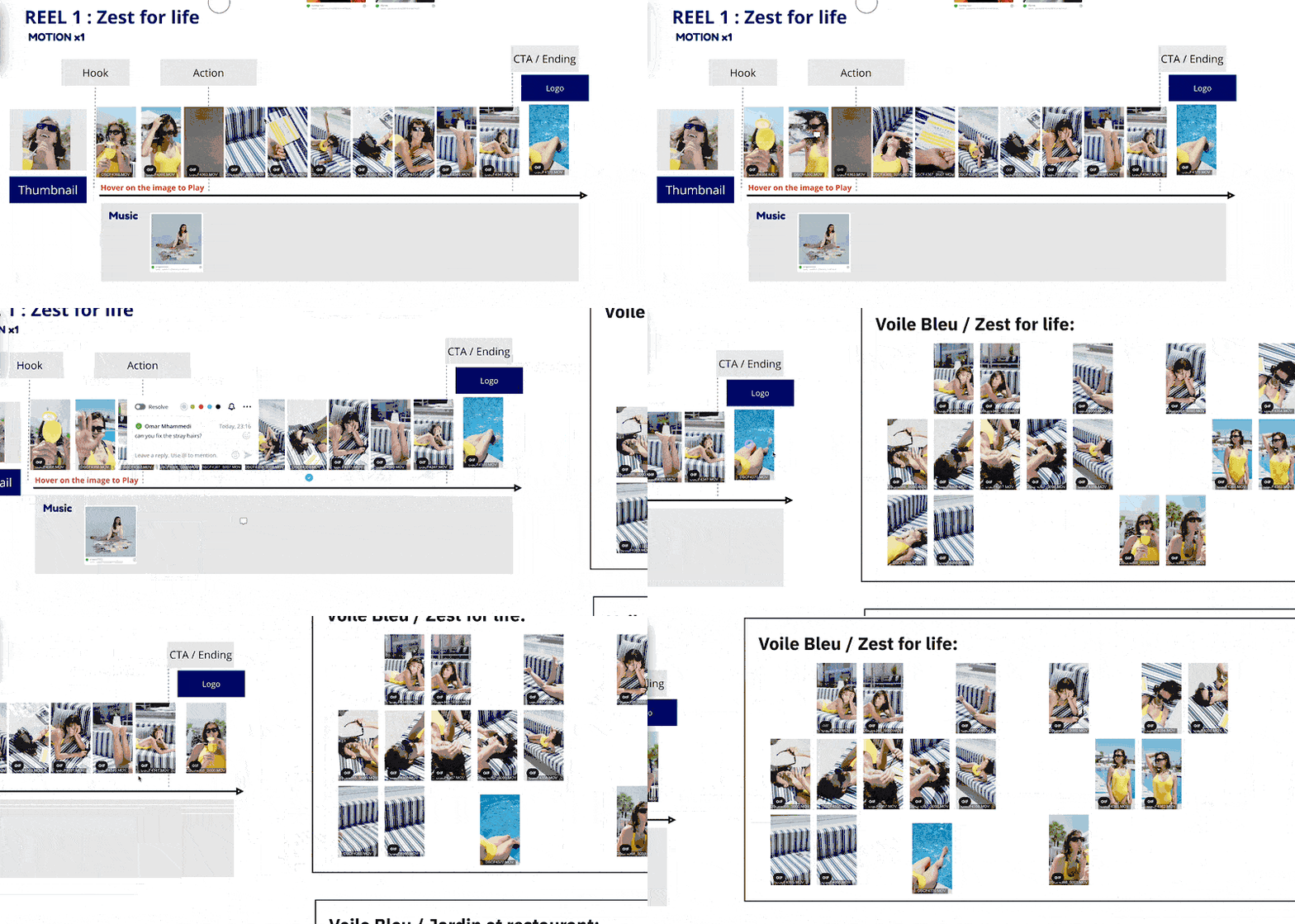
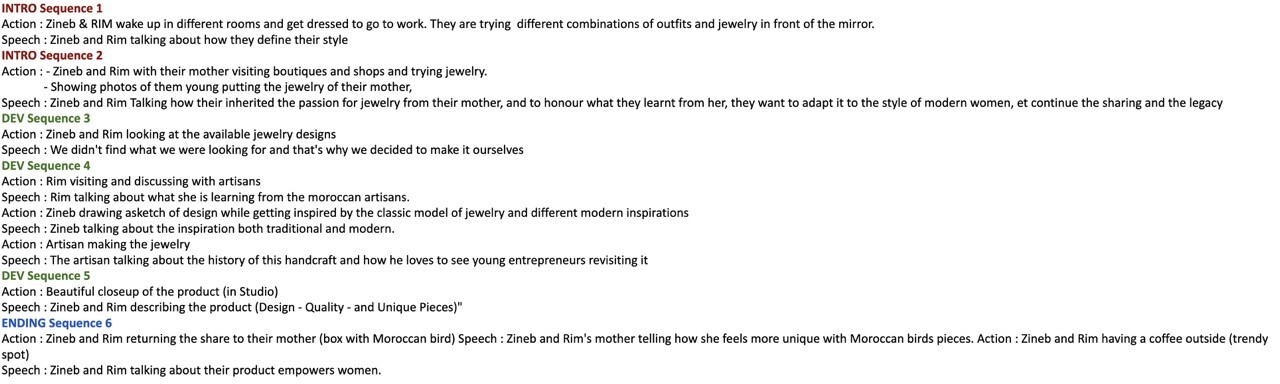
A simple draft script that combines the actions and, for corporate projects, what is said. We present it to the client as part of pre-production, before moving on to the Pre-Edit.
What comes next
The next step is to rebuild this framework in Coda. Coda gives more flexibility in logic and visualization, and it lets us share public, interactive documents with collaborators (in its Play mode) without worrying that they will change the formulas. The longer-term goal is an interactive web app, in the style of Typeform, that guides users through the whole construction process.